




portsmouth abbey news
Dom Luke Childs Lecture 2026
Author Debra Curtis shares the inspiration behind her most recent novel, "Laws of Love and Logic"
New York Times bestselling author and cherished member of the Abbey community, Debra Curtis, reflected on her most recent novel, titled "Laws of Love and Logic," for this year's Dom Luke Childs Lecture. Her book explores themes of love's enduring power and the human spirit's capacity for forgiveness and redemption. She recounted stories to the student body about her experience growing up with severe dyslexia, rekindling her academic curiosity through studies in anthropology, and honoring the people and the memories that shaped her into the acclaimed author she is today. Curtis self-proclaims her novel to be a “love letter to the Abbey,” encapsulating the beauty of community, faith and education unique to the Portsmouth Abbey School. We connected with Curtis to inquire more deeply about the influences and vision behind her latest novel. Below are her responses.
Q. Can you recall the story about your feelings towards writing and academics before college, and what you thought you could become?
A. When I was young, I did not show any academic potential. While my friends were placed in college preparatory courses, I was placed in, what they called in the 1970s, “voc tech” classes. Educators retired the term because it carried too much stigma. In 1980, when I was applying to colleges, my SAT scores were so low that I was accepted on probation to a small college in New Hampshire. Looking back, having never been exposed to a robust liberal arts program, I thought I had to be an elementary school teacher, like my mother. A profession like anthropology had never occurred to me.
Q. How did you discover your dyslexia, and how did you avoid letting it define you?
A. Fortunately, during my freshman year of college, I enrolled in an anthropology course with a junior professor who would later go on to become a premier American Anthropologist.
I was inspired by his lectures. He asked questions like "What does it mean to be human?" "Do all cultures have forms of government?" "How do different cultures view death?" "Is childhood the same all over the world?" There, in his classroom, the light went on—so to speak. Early on, I told him I wanted to become a professional anthropologist, to which he responded, “You will need to learn how to read and write first.” In 1985, I moved to California and somehow, I managed to get a position as a research assistant in the Department of Psychiatry at Stanford University School of Medicine. My responsibilities included interviewing drug addicts who were living at a long-term residential rehabilitation program at the Palo Alto VA Medical Center. I was also responsible for data entry. Not long after I began entering scores into the computer, my boss, who was both a psychiatrist and mathematician, suspected that I had a language disability.
He arranged for me to be evaluated. Tests revealed that I am dyslexic. I have tremendous difficulty decoding and isolating sounds, reading, and understanding the meaning of numbers and connecting a number to a physical quantity.
In 1990, I relied on the testing center’s documentation to address my low GRE scores when applying to graduate programs in anthropology. It took twelve years, but I eventually earned a PhD in Anthropology from Rutgers University. To complete my research, I was awarded a grant from the National Science Foundation. My first book has been taught at universities and colleges such as, Cambridge, Brown, Columbia, and Amherst, to name a few. I went on to have a long and rewarding career as a college professor at Salve Regina University in Newport, R.I.
Dyslexia has defined me and has had a huge impact on my life and career. There are skills that I do not possess which impact my ability to do math and learn foreign languages. My daughter Zoe Butler likes to say, “Any number over nine, Mom can’t read.” However, I never allowed it to restrict my ambition or curtail my dreams.
Once I developed compensatory strategies for reading, the world of knowledge through books, opened to me. I still have tremendous difficulty with certain subjects and at 62 years old, I can’t tell the difference between right and left, but now if I want a deep understanding of a subject, for instance, I know how to read, albeit incredibly slowly. An example of a compensatory strategy I might deploy involves copying sections of a text, word for word, into one of my notebooks until I understand the concept or idea. It’s laborious, but it works.
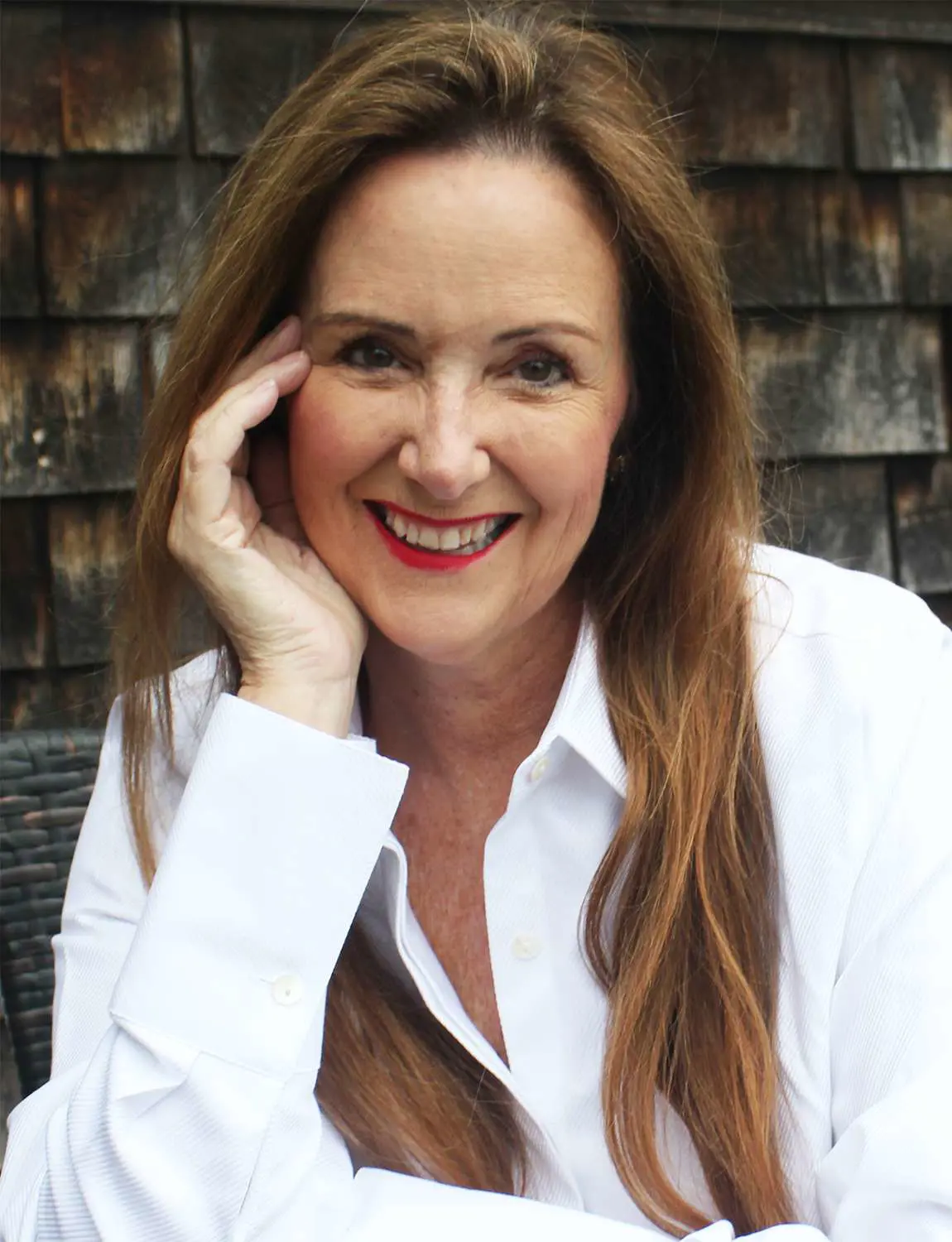
Above: Debra Curtis, Ph.D., author of "Laws of Love and Logic."
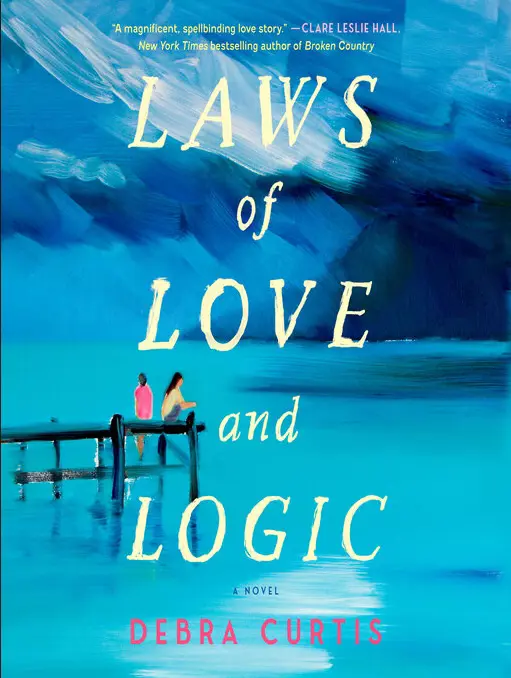
Below: The cover of the New York Times bestselling novel "Laws of Love and Logic."
Q. How does your novel connect back to the Abbey in its characters and events? Why/how did you choose this?
A. "Laws of Love and Logic" opens in the early seventies at the Portsmouth Abbey, formerly known as the Portsmouth Priory. Mr. and Mrs. Webb and their two daughters, Lily and Jane, live on the school grounds. Mr. Webb teaches science and Mrs. Webb, a Vatican II Catholic and feminist, is intent on supplementing her daughters’ education at Saint Philomena School with her own lessons in literature and art history. She relies on Father Thomas, who was fashioned after Father Leo van Winkle, who worked with Oppenheimer, to tutor her youngest daughter Jane in mathematics.
I chose the Portsmouth Abbey as the setting for the novel for several reasons. Having grown up in Portsmouth in the seventies, I had always been aware of the school’s existence and reputation. However, I didn’t know how special it was until my nephews (Dan Murray ‘03, Michael Behan ‘08 and Garret Behan ‘11) attended the school.
Once my own daughters, Emma and Zoe Butler ‘12 were enrolled, Portsmouth Abbey took on much more significance in my life because it changed their lives. Now, my husband, Dr. Butler, has served as the Abbey physician for over ten years and we live on the Abbey grounds at the edge of the property. In the past, I walked my beloved English bulldog, Harry, on campus. If I were lucky, I would run into Father Paschal, and we would have marvelous conversations about faith and science. For years, like Mrs. Webb in my novel, I, too, was a member of the Faculty Book Club with Father Damian, Tom Kennedy, David McCarthy, Dan McDonough, Cliff Hobbins, and Mary Jean McDonough. In my heart, I recognize that I’ll never again be a part of a book club with such erudite readers.
Q. Why is the novel referred to as a "love letter to the Abbey"? How does cherishing memory influence your writing? Is it to encapsulate a thought, a feeling, a moment, a person, etc., or is there a different motivation for anchoring your novel in memory?
Several readers have commented that the PAS [Portsmouth Abbey School] is painted in a bright light in my debut novel. One reader described it as a “love letter” to Portsmouth Abbey. I couldn’t agree more.
In 2012, I watched my demure and nervous twin daughters transform into confident, brave women who returned home every day inspired by something they had learned at school. One day it might have been something they discussed in class about Milton’s Paradise Lost. Another day, it might have been how their math teacher had elegantly described geometry. Portsmouth Abbey prepared my daughters for some of the best universities in the country. I also value my in-depth discussions with Abbey faculty, even when we disagreed politically, as they were among the most enriching academic conversations I’ve had. These cherished memories fueled my imagination, and I was able to pull from my experience to create and write meaningful scenes.
Q. How has the theme of radical forgiveness influenced your writing process for the novel? What do you hope your readers gain from this theme?
In "Laws of Love or Logic," Father Thomas, a Benedictine monk who tutors Jane Webb, loans The Bells of Nagasaki, the autobiography of Dr. Takashi [Nagai], a Catholic Japanese radiologist to Mr. Webb. In the book, the author describes how moments before the atomic bomb was dropped over Nagasaki, he sought shelter in a hospital bunker. When he emerged, his city was decimated, and he returned to his home to find his wife’s ashes and bones. He spent the rest of his life teaching radical forgiveness—a type of forgiveness I’ve always found unfathomable. I do not fully comprehend it, but I know that it is holy. I wrote my debut novel with this story in mind. My gut tells me that soon, as a society, we may need to consider radical forgiveness—that is we need to consider the promises of radical forgiveness as opposed to revenge and retaliation.
Q. Is there another book in the works?
A. My next novel is about a young anthropologist who travels to Mongolia to conduct fieldwork on the grasslands with nomads. It takes place right before the Democratic revolution in 1989. While living with her host family, their eldest son returns from the city, a professor of military history in Ulaanbaatar. The anthropologist and professor fall madly in love, but after the revolution, Mongolia becomes a failed state, and the anthropologist returns home to Rhode Island to raise her daughter alone. Seventeen years later, we’re introduced to the anthropologist’s daughter, who was raised to believe that her father died during the revolution. It’s about the sacrifices a mother makes—trading the love of her life for her child’s perceived well-being.
"Laws of Love and Logic" was published by Jenna Bush Hager's Thousand Voices and Ballantine Books, an imprint of Random House. It was featured on the TODAY Show. Debra Curtis will be appearing at the Ocean House in Watch Hill on July, 16, 2026. "Laws of Love and Logic" is available for purchase through Amazon.com and local book retailers near you.