



portsmouth abbey news
Convergence: Art, Science and Technology
|
L-R: James Kim '27, Mickey Yang '27, JJ Servidea '27, Nathaniel Im '27, Mark Nadeau, Dr. Stephen Zins, Keegan McCarthy '27, Jichao Li '27, Lucia Acanfora '29, Panya Zhu '27 and Erica Kim '27. |
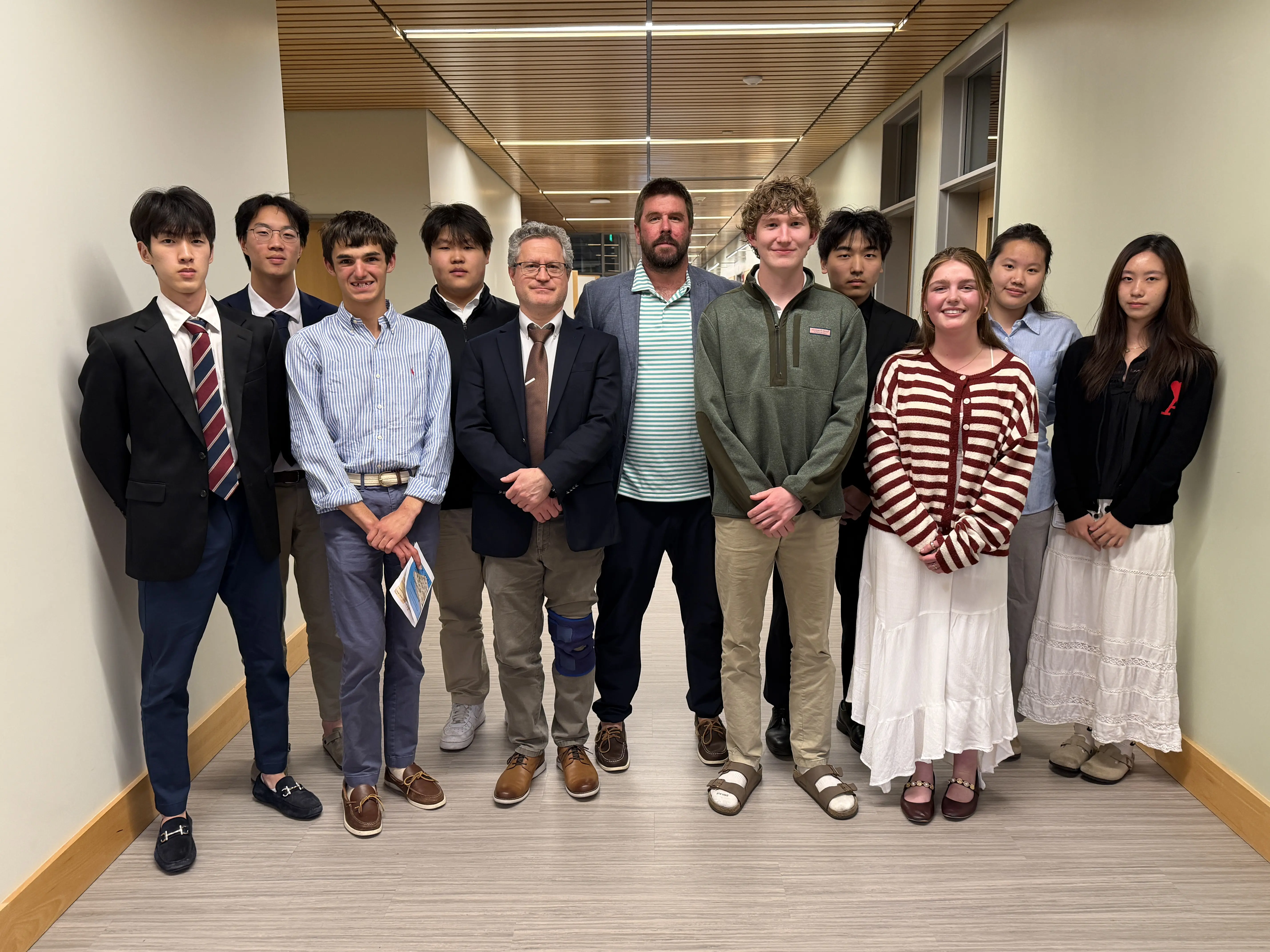
Presented on May 1, the Student Art and Science Exposition offered a compelling example of how creative inquiry and scientific investigation can intersect to produce meaningful scholarship and innovation. Throughout the event, students and faculty demonstrated that theory and practice are not separate disciplines, but interconnected processes that enrich understanding across fields. The exposition reflected an academic perspective grounded in experimentation, research, and creation, emphasizing that creative work and scholarship conducted side-by-side foster responsible, inventive, and critical problem-solving.
The evening began with a series of oral presentations by students sharing their scientific research projects. Under the mentorship of Dr. Stephen Zins, head of the Science Department, all of the research presented had previously been recognized as internal winners of the Portsmouth Abbey Science Grant, highlighting the exceptional quality and originality of the students’ work. Many of these projects were later presented at the Rhode Island Science and Engineering Fair (RISEF), where students engaged with a broader scientific community and showcased their findings alongside other emerging researchers.
The projects themselves reflected an impressive range of interdisciplinary inquiry. Students presented work on Gram-staining analysis of bacterial control of weeds, stress tolerance and heritability in E. coli, and the influence of exercise-related molecules on immune response to cancer, demonstrating sophisticated engagement with microbiology and human health. Other projects addressed environmental concerns, including assessments of microplastic abundance in coastal bays and evaluations of bycatch reduction devices and short-tow effectiveness in North Carolina shrimp trawling. Technology and engineering were also strongly represented through projects such as Wi-Safe, a low-cost, privacy-preserving fall detection system, and an AI-driven framework for large-scale temporal urban traffic prediction. Additional studies explored public health and chemistry, including comparisons of radon levels across Portsmouth Abbey’s campus and the use of a DPPH antioxidant assay to determine the optimal steeping temperature for maximizing antioxidant activity in green tea.
Collectively, the presentations demonstrated not only technical skill and scientific rigor, but also creativity, communication, and social awareness. Students revealed that research is not merely the collection of data, but an evolving process of observation, experimentation, interpretation, and innovation.
Following the research presentations, Nadeau’s photography class unveiled a collection of forced-perspective photographs that transformed ordinary spaces into imaginative visual illusions. Through careful manipulation of scale, angle, and positioning, students challenged viewers’ assumptions about reality and perception. The exhibit emphasized the technical precision involved in photographic composition while encouraging audiences to think critically about how images shape understanding. Technology and artistic vision worked hand in hand, illustrating how experimentation can blur the boundaries between documentation and invention.
The exposition then shifted toward mathematics as students from Clarence Chenoweth’s precalculus course demonstrated graphing functions and mathematical modeling techniques. Using digital graphing tools, students translated abstract equations into dynamic visual forms, revealing patterns and relationships that might otherwise remain unseen. Their demonstrations underscored the artistic qualities inherent in mathematics—symmetry, structure, rhythm, and design—while also showcasing the practical applications of analytical thinking.
Together, the presentations embodied a shared academic mission: exploring the dynamic relationships between art, science, technology, and culture through research, experimentation, and creation. The exposition demonstrated that innovation often emerges when disciplines intersect, and that the integration of theory and practice can inspire thoughtful, transformative learning.
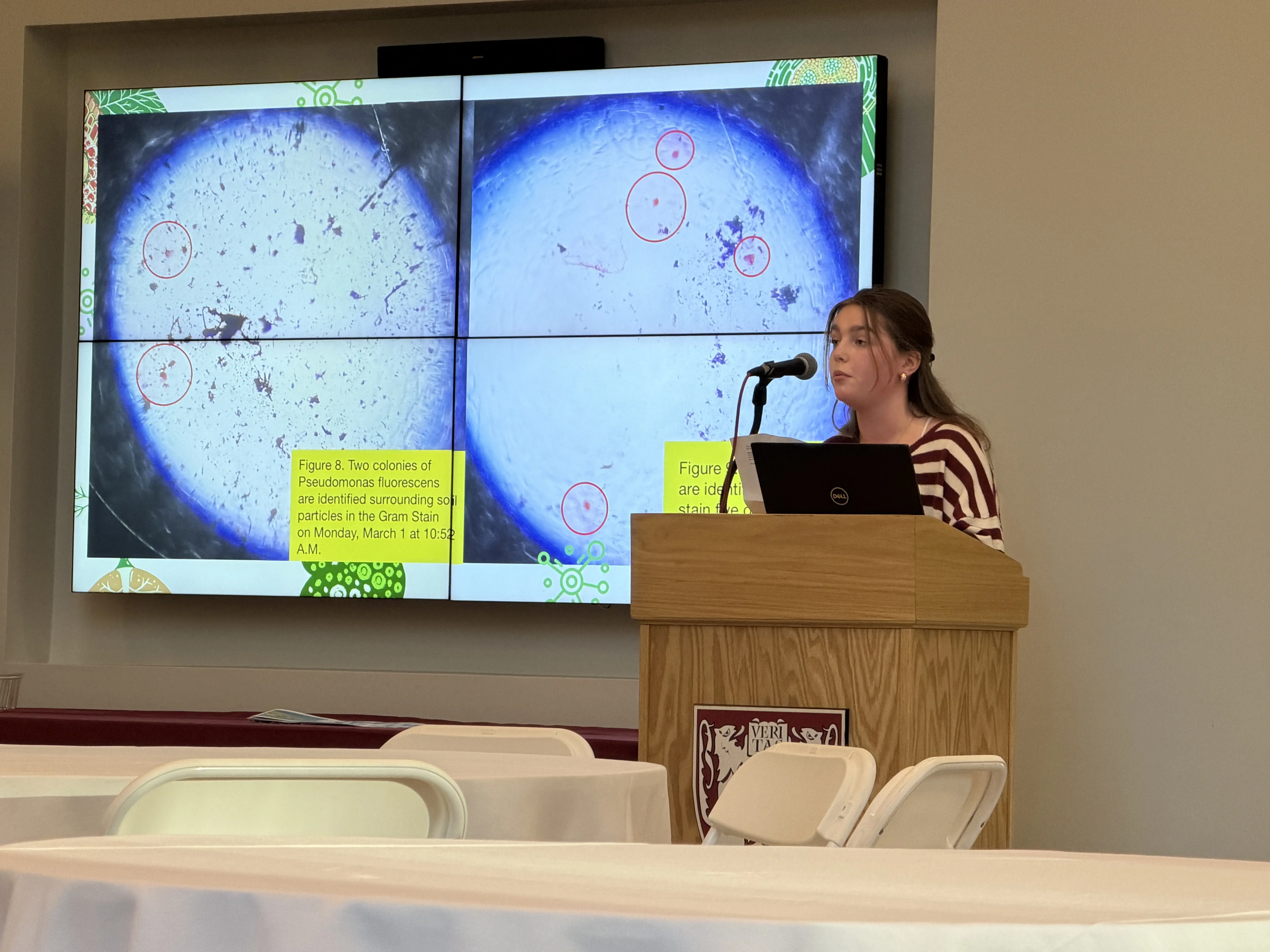
Lucia Acanfora '29 presenting her project titled Gram staining analysis of bacterial control of weeds.
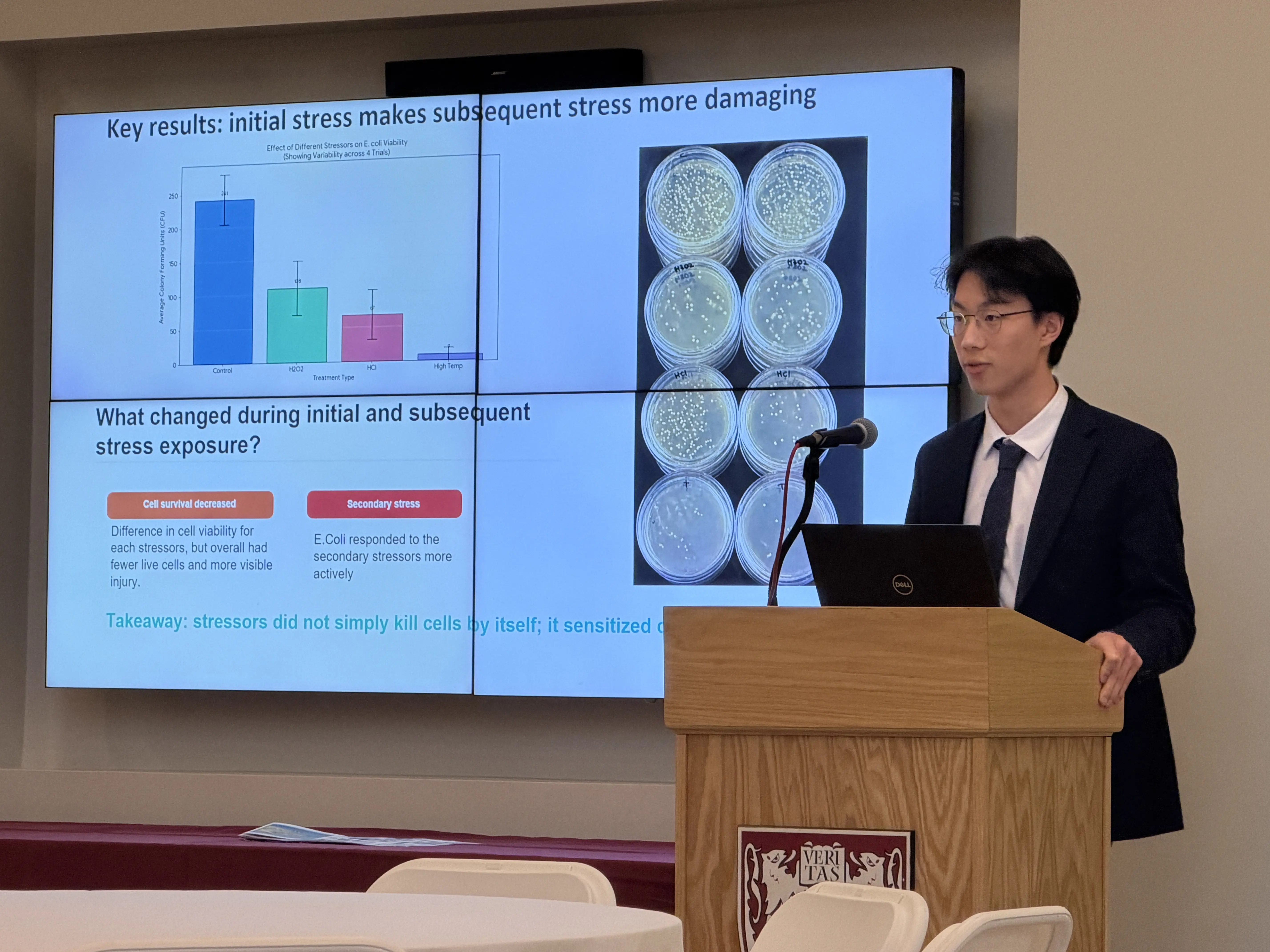
Mickey Yang '27 presenting his project titled Stress tolerance and its heritability: Hormesis analyzed in E. coli.
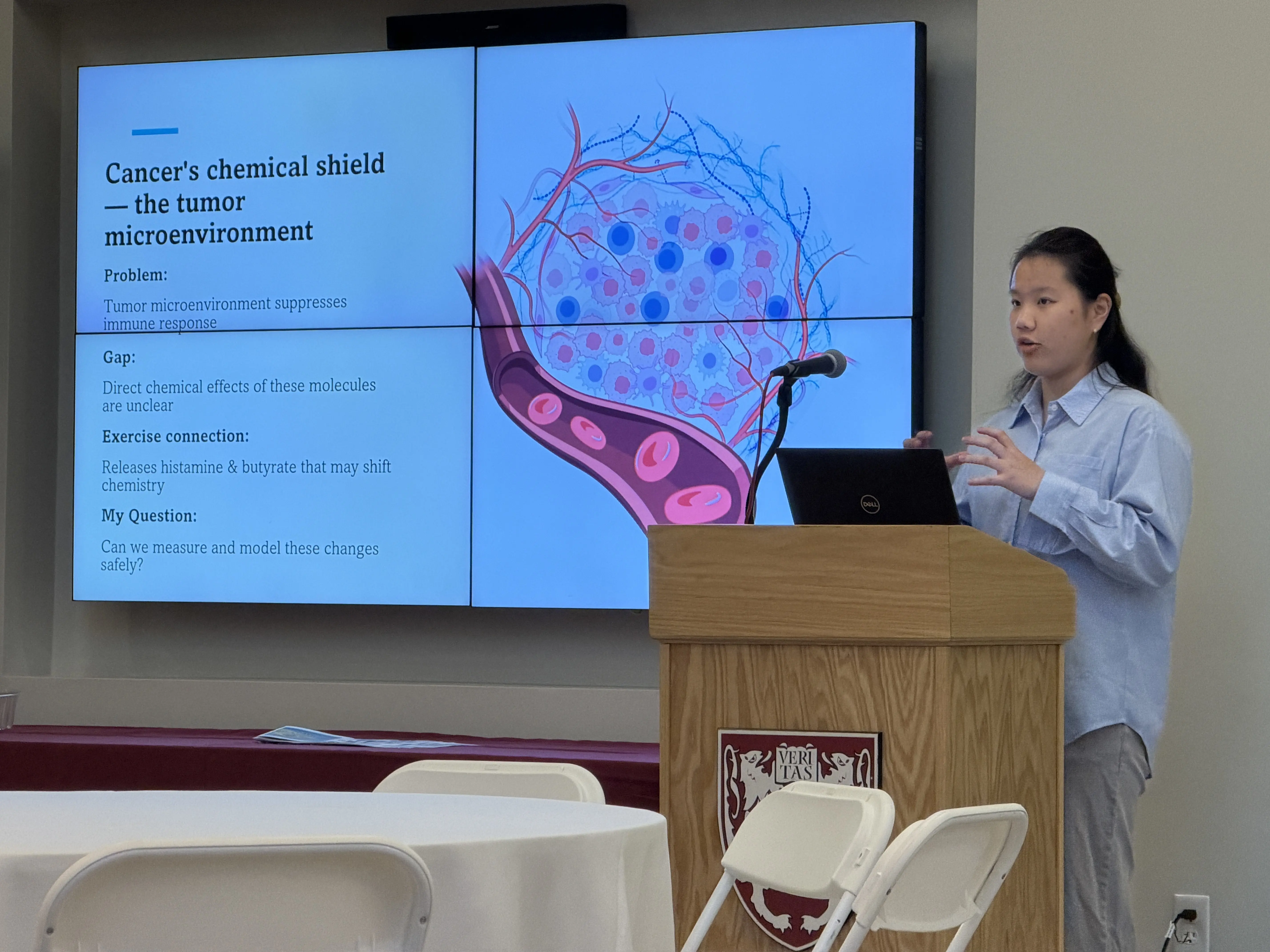
Panya Zhu '27 presenting her project titled The influence of exercise-related molecules on immune response to cancer.
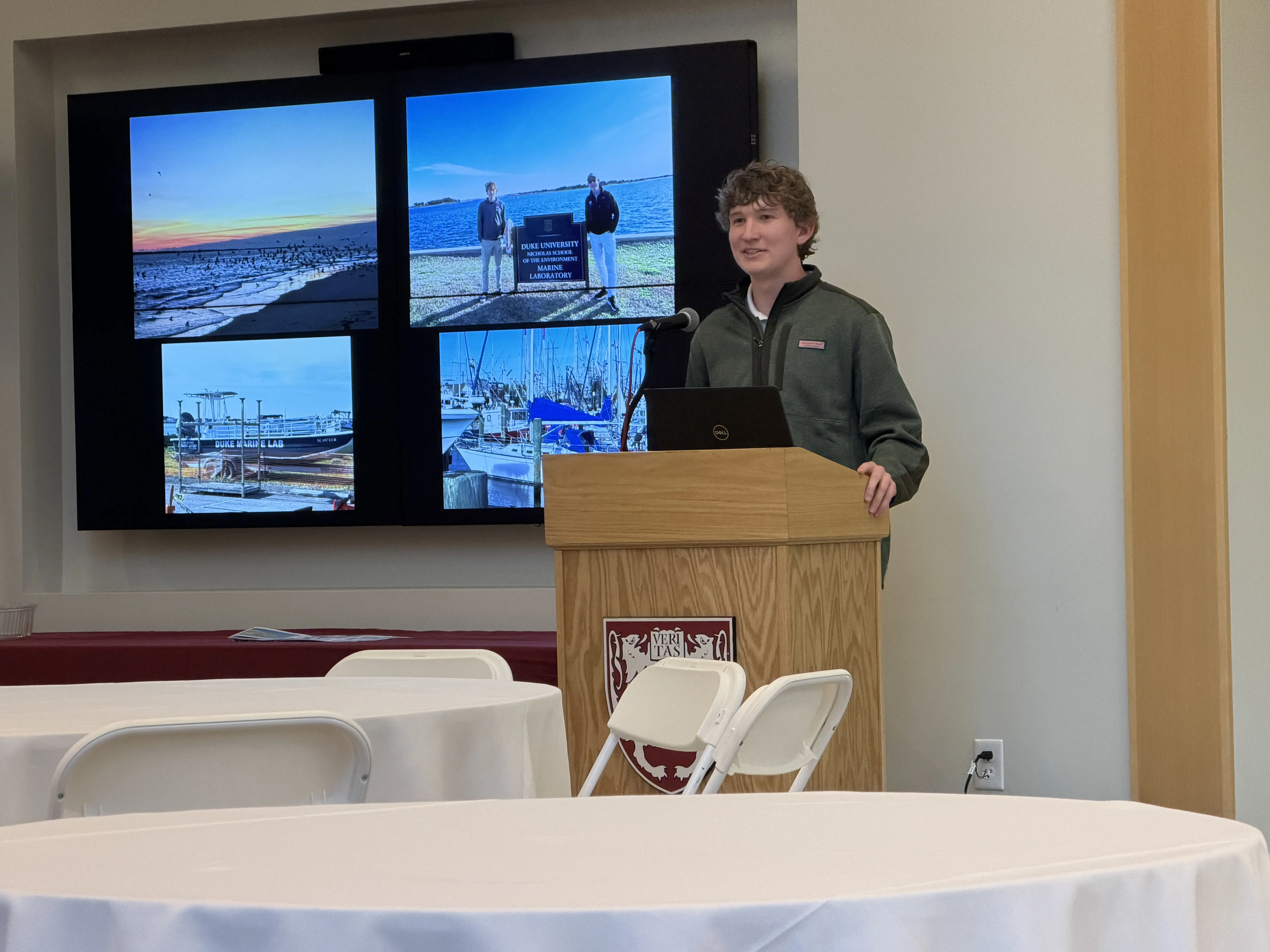
Keegan McCarthy '27 presenting his project titled Evaluating BRD and short-tow effectiveness in North Carolina shrimp trawling.
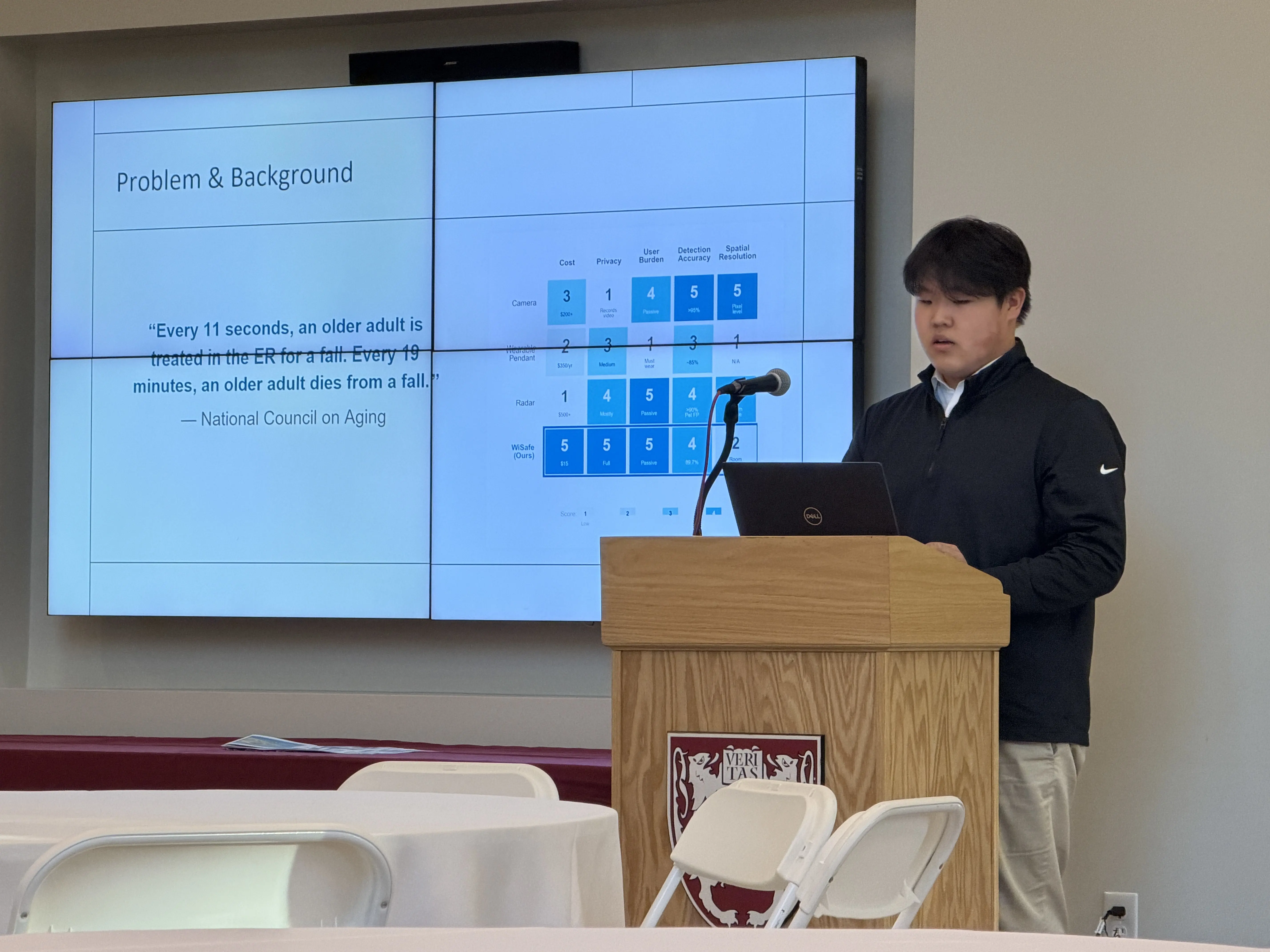
Nathaniel Im '27 presenting his project titled Wi-Safe: A low-cost, privacy-preserving fall detection system.
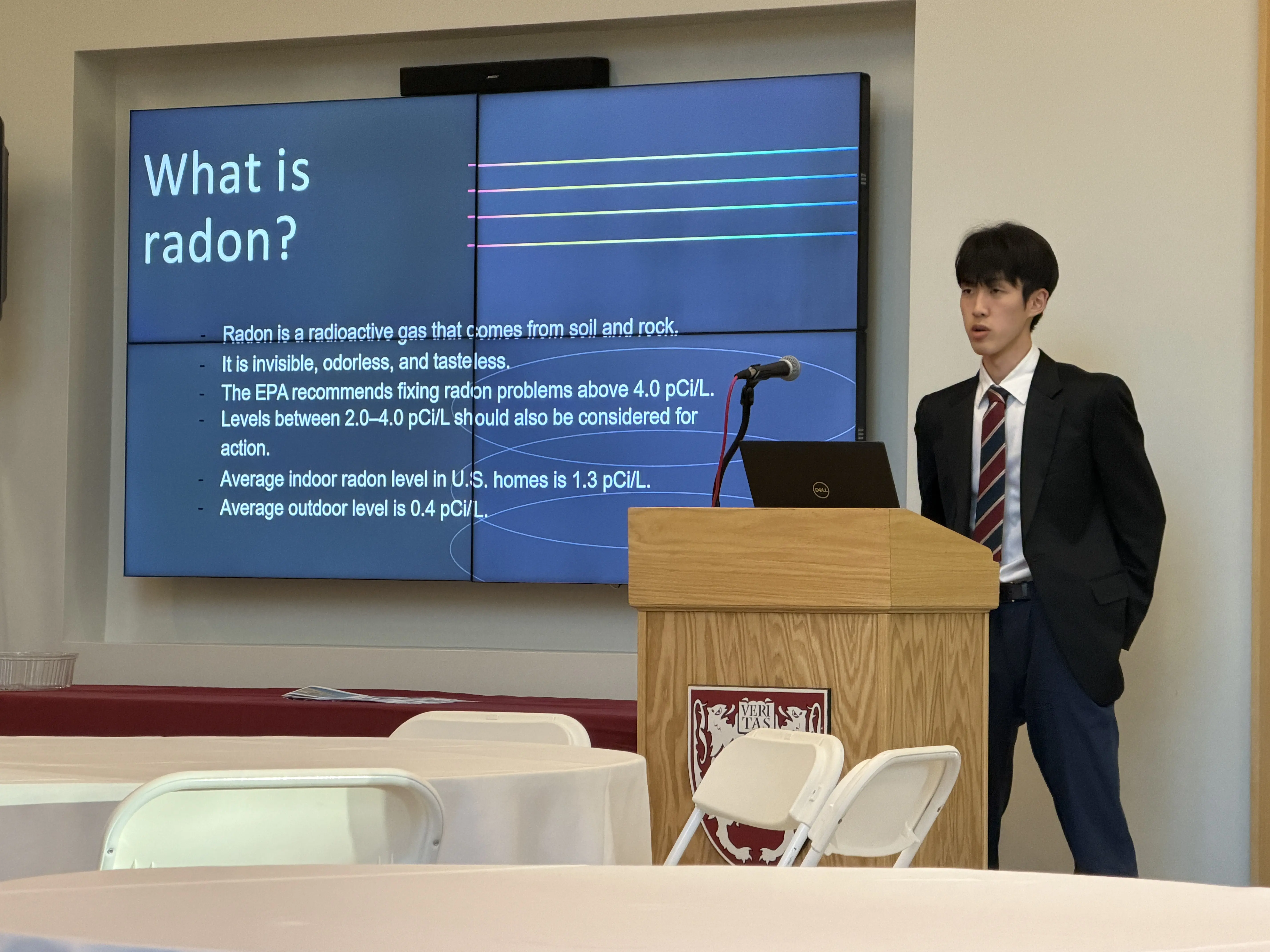
James Kim '27 presenting his project titled Comparing radon levels across Portsmouth Abbey's campus.