






portsmouth abbey news
Guest Lecturers Bring Real-World Insight to Students
Shaping the future of Medical Devices and scientific inquiry
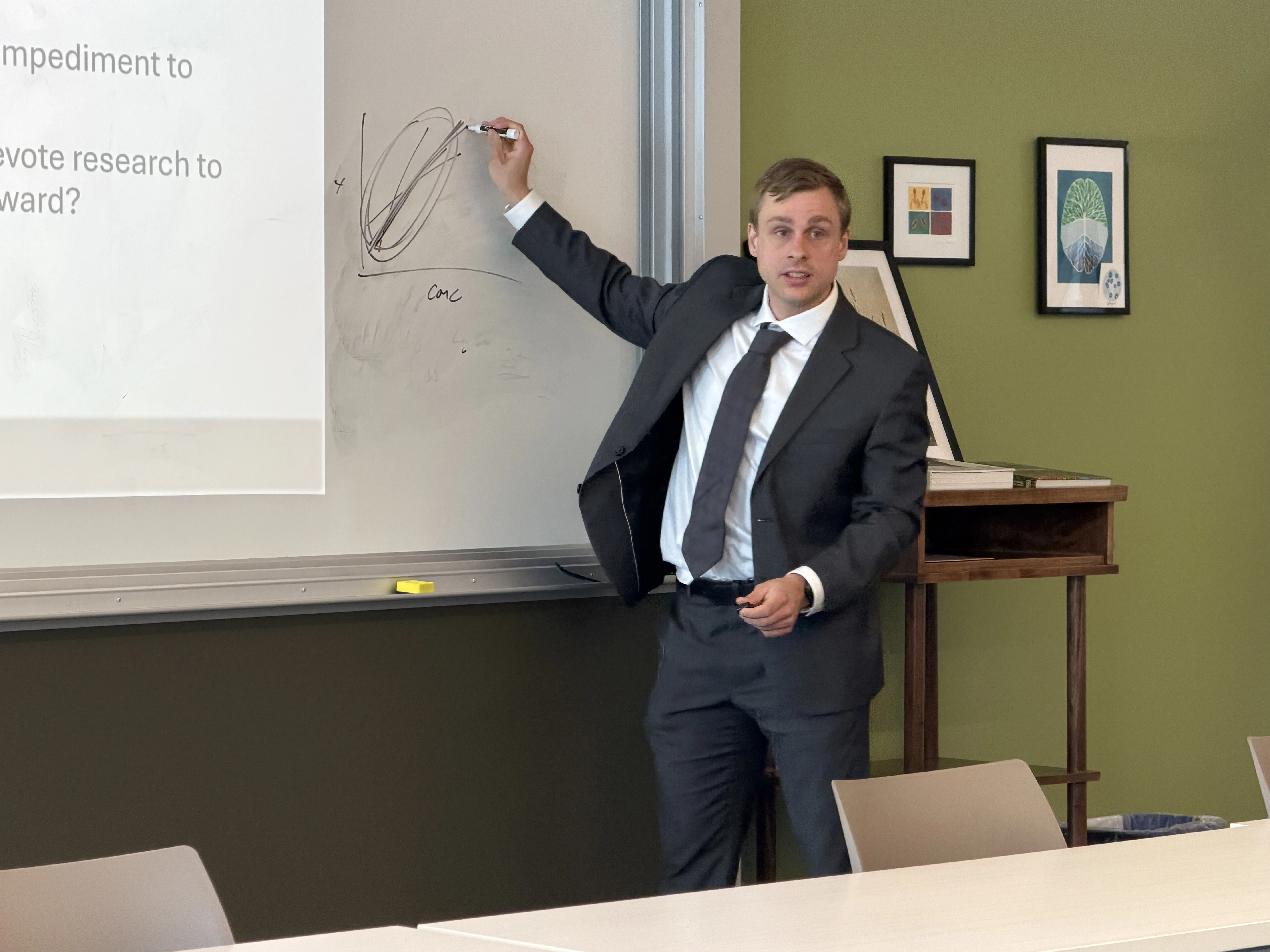
Chemical and Biological Engineering Ph.D. candidate Frank Rybicki ’16 visited Dr. Steven Zins’ Advanced Topics in Research class to share his cutting-edge research with students. His work focuses on designing effective point-of-care (POC) biosensing technologies and low-cost analytical devices for clinically relevant biomarkers. POC diagnostic tools have been in use for decades and are commonly utilized as blood glucose meters, urine pregnancy test strips and rapid COVID-19 antigen tests. The goal of POC technologies is derived from a need to provide real-time, lab-quality results at the site of patient care, also defined by Rybicki as “[bringing] the diagnostics closer to patients.” As explained in his presentation, these devices directly speak to a potential to transform access to medical diagnostics for metabolic disorders, such as hyperammonemia, characterized by abnormally high levels of ammonia (NH₃) in the blood, which is neurotoxic.
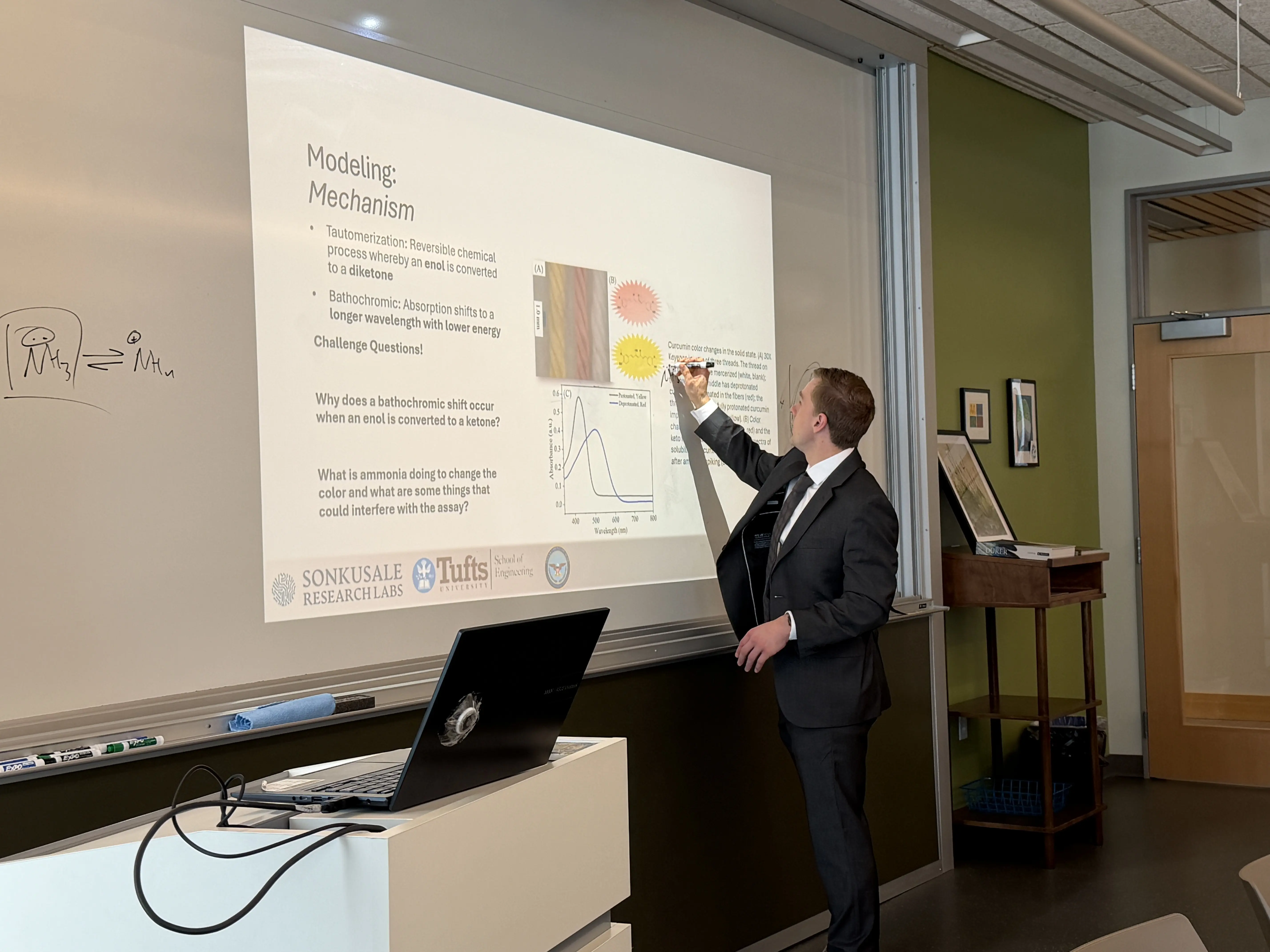
During his visit, Rybicki presented his first-author research on a novel distance-based thread analytical device (dTAD) for quantifying urinary ammonia. Bringing along a prototype of his device, Rybicki created an interactive experience that invited students to engage with the research process, from identifying needs for development within the field to analyzing the potential limitations of the research design and approach.
What set his talk apart was his approach: he structured the session around thoughtful critique of his own published work, giving students rare insight into the research process and science communication. Questions about the world are often investigated from many different approaches and perspectives, yielding different conclusions from the same data. Therefore, young researchers must consider discernment and feedback within their own research process as intrinsic and constantly evolving. Rybicki used the lecture as an opportunity to instill the intellectual curiosity that embraces nuance in research, even breaking students into groups to brainstorm current impediments to action in the field.
Looking towards new research endeavors, Rybicki also discussed his current project funded by the Department of War. Demonstrating the wide array of POC technology applications, his project focuses on developing an electrochemical lateral flow biosensor, a distinct POC device, for detecting salivary microRNA (miRNA) in cases of traumatic brain injury (TBI). In cases of TBI, miRNA is expressed differently, becoming a prospective biomarker for TBI pathology research (Consalvo et al.) Drawing on an interdisciplinary background that spans chemical engineering, biology and translational medical research, Rybicki offered students a compelling look at the future of POC diagnostics.
His passion for innovation and natural teaching ability left a lasting impression on the students. As he fondly shared a photo and memories of conducting chemistry experiments with his former classmates, Rybicki cites Portsmouth Abbey as a foundational influence for his love of chemistry and scientific inquiry, inspiring students to cultivate their natural curiosity and problem-solving skills and consider the role they can play in advancing healthcare technology.
Above: Frank Rybicki, Ph.D., '16 drawing out a schematic for the Advanced Topics in Research students.
 |
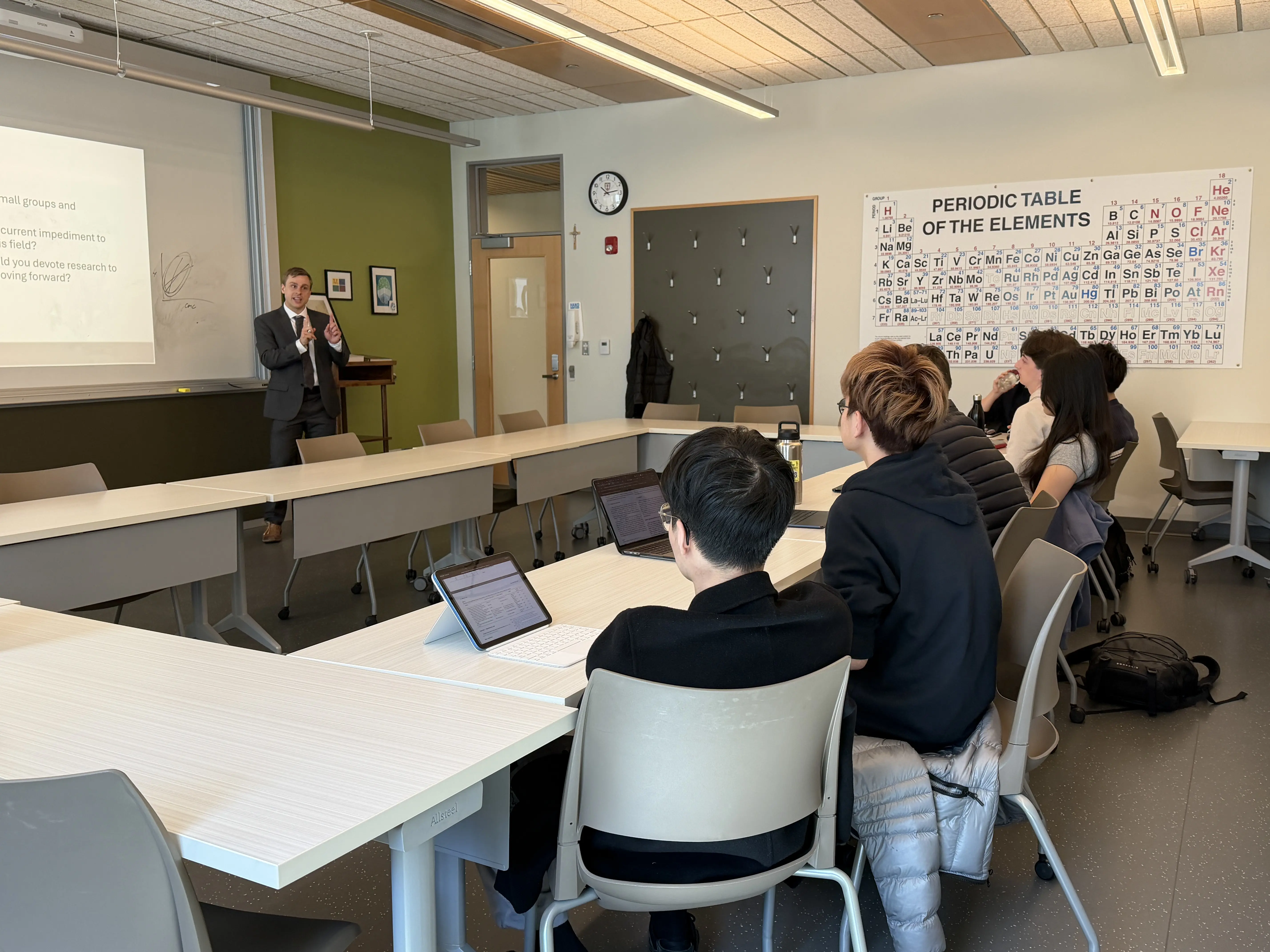 |
Frank Rybicki, Ph.D., '16 delving into the research design for his POC device and brainstorming with students about research development strategies.
Worth it, With Purpose: Rethinking the College Journey
A recent Portsmouth Institute-sponsored event held in the RLH drew an overflowing crowd of students, faculty, and monks, with several attendees standing due to the lack of space. This lecture, delivered April 10, featured Chris Higgins, Professor and Chair in the Department of Formative Education at Boston College’s Lynch School of Education and Human Development. Higgins, who earned his BA from Yale University and his Ph.D. from Teachers College at Columbia University, is also the author of The Good Life of Teaching and Undeclared: A Philosophy of Formative Higher Education.
Titled “Is College Worth It?”, Higgins’ lecture evaluated the cultural assumptions that shape how we evaluate higher education. He noted that many students are encouraged to ask questions such as: Where do I rank against my peers? What is the most competitive college I can get into? And how far can I advance beyond college? According to Higgins, these questions frame college as a “positional good,” defined by a college’s value being derived from its scarcity and dependent on its exclusivity. Through this frame of reference, college becomes merely a means to achieve or secure preexisting goals, wants and desires.
Higgins challenged this prevailing mindset by proposing a different set of questions: Who do I hope to become? And what college will best support my development over the next four years? These questions shift the focus away from competition and outcomes towards personal growth and formation – from “positional good” to “non-positional good”. Within this frame of reference, similar to relationships, health and leisure, placing value not within scarcity or utility, but rather in its intrinsic role in shaping a meaningful life.
Central to Higgins’ argument is the idea of “formative value.” Rather than treating education as a transaction, he encouraged students to see college as an opportunity to reflect on what is truly worth wanting and caring about. He concluded by emphasizing that college offers a unique chance to expand one’s understanding of value itself, resisting the tendency to reduce education to a financial investment.
Ultimately, Higgins’ lecture challenges students to reimagine what success after high school really means to themselves, echoing the philosophy and practices of our Office of College Counseling at Portsmouth Abbey School. By reframing the student narrative during the college application process, prospective college applicants are encouraged to think beyond name recognition and rankings to identify the specific opportunities in higher education that foster self-actualization. This perspective reframes our relationship with higher education and the role it plays in the formative early adulthood.
The “formative value” mentality shift in the mainstream, as proposed by Higgins, would extend beyond the students’ experience, delegating a redefined responsibility on counselors, parents and mentors as they continue to guide future generations. At Portsmouth Abbey School, “we want all students to actualize their full potential, and take advantage of the opportunities presented to them to achieve their goals while always focusing not only on what they’d like to do in the future, but on what kind of person they want to be”, said Diane Soboski, our Director of College Counseling. “They’re at such a formative stage in their life; it’s exciting but can be a little daunting as well to think about what the future holds. When guided by self-reflection and honest answers to questions about what’s most important in their life, what they want their legacy to be, and how they’re going to use their gifts to have a positive impact on others, the process becomes a journey of self-discovery rather than a checklist that needs to be conquered.”
Rather than choosing a college based solely on prestige or future earnings, students can approach this next step as an opportunity for personal growth, asking not just what they will achieve, but who they will become. By viewing college as a formative experience, students can make decisions that shape their values, deepen their understanding of what matters, and guide them toward a more thoughtful and meaningful life.
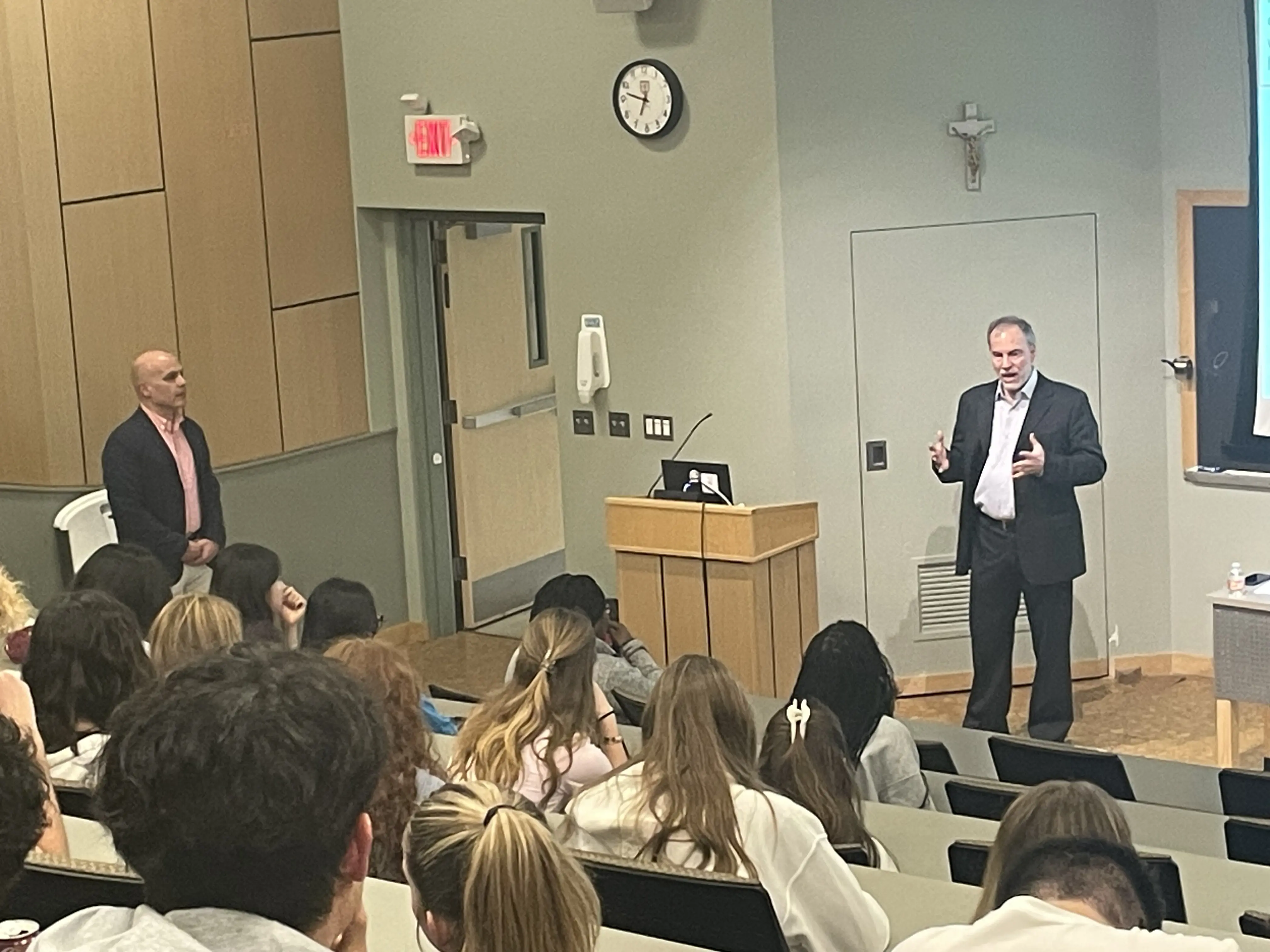
Chris Higgins, Ph.D., addressing students during his "Is College Worth It?" Lecture.